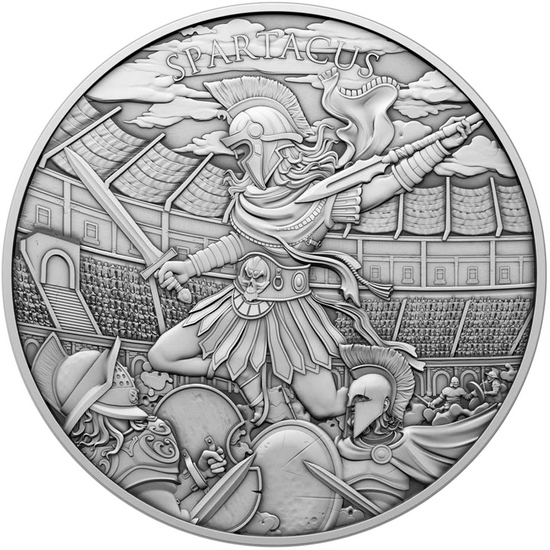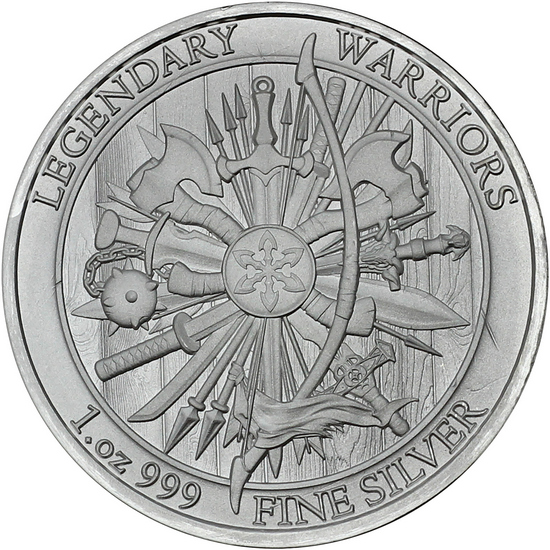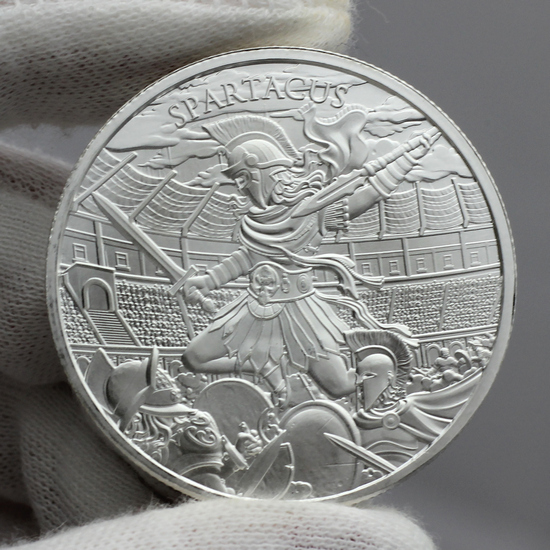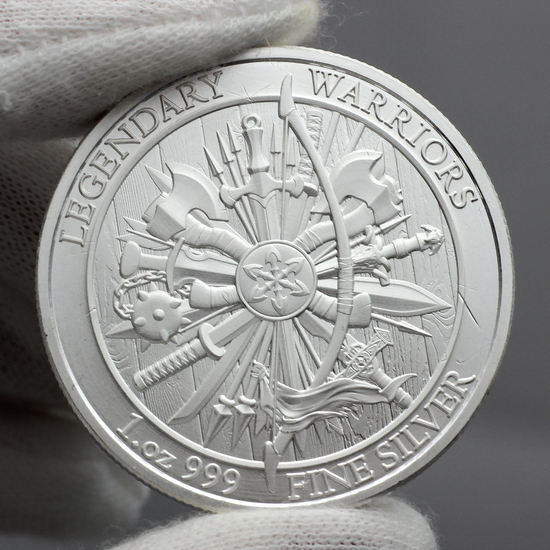

We continue our series honoring the Legendary Warriors with the eighth release. Depicted on silver medallions, our next leader led the most renowned slave uprising against the Roman Republic during the Third Servile War in 73-71 BC. His story blends documented history with enduring legend, shaping modern conversations about resistance, freedom, and power.
Spartacus
Ancient authors identify Spartacus as Thracian, likely from the Balkans near modern Bulgaria or northeastern Greece. He may have been freeborn before enslavement, and some accounts imply prior service as an auxiliary in Roman forces. Such experience would help explain his tactical skills. Thracian warriors were known for agile, light infantry tactics, reflected later in his army’s mobility.
Rome’s conquests fed a vast system of enslaved labor. Gladiatorial schools became grim institutions within this economy, channeling the strong and skilled into arenas for profit and spectacle. Spartacus was sold into a gladiatorial school (ludus) at Capua under Lentulus Batiatus. Conditions were harsh, with strict discipline, controlled diets, and intensive weapon drills. Training emphasized specific fighting styles, but the barracks also fostered camaraderie among captives.
In 73 BCE, Spartacus and about 70 companions escaped, reportedly arming themselves first with kitchen tools before seizing real weapons. They reached Mount Vesuvius and used the terrain to outmaneuver pursuing forces, turning a desperate breakout into a sustained insurgency.
Spartacus emerged as the leading commander, alongside lieutenants like Crixus and Oenomaus. The force swelled to tens of thousands, drawing enslaved people, rural poor, and deserters. The rebels notched early victories against poorly coordinated Roman militias through speed, foraging, and surprise, maneuvering across southern Italy and sometimes dividing to gather supplies and recruits.
Internal divisions over strategy, along with Rome’s appointment of Marcus Licinius Crassus to command stronger legions with harsher discipline, shifted momentum. Attempts to move north, possibly to cross the Alps, faltered under conflicting aims and Roman pressure. The rebellion ended in 71 BCE in southern Italy; Spartacus died in battle, and thousands of captives were crucified along the Appian Way.
Objective, Ideology, and Legacy
The primary objective appears to have been escape and self-liberation, potentially returning followers to their homelands. Some factions sought plunder or pursued separate agendas, complicating unified strategy. Contemporaries saw the revolt as a grave threat but not an ideological revolution.
Later interpretations, especially in the 19th and 20th centuries, reimagined Spartacus as a champion of the oppressed. His legacy spans novels, the 1960 film starring Kirk Douglas, television series, labor and civil rights speeches, and annual commemorations. “Spartacus” endures as a symbol of solidarity and defiance.
Collect the Legendary Warriors Series
Explore all currently available Spartacus silver medallion releases and browse the complete Legendary Warriors Series featuring iconic historical leaders commemorated in 1 oz .999 fine silver.
Looking to own every release issued to date? Shop the Legendary Warriors Series complete collection set and secure one of each design released up to this point.